
Anúncios
Curious how your brain really stacks up? An IQ test app puts cognitive science in your pocket, offering quick, data-driven insight into reasoning and problem-solving skills. 🧠
Intelligence testing used to mean sitting in a psychologist’s office for hours, answering questions on paper while someone timed you with a stopwatch. That changed completely once mobile technology caught up with cognitive science.
Today’s testing applications combine pattern recognition, logic puzzles, and spatial reasoning challenges into a format that fits a coffee break. The results aren’t a substitute for clinical evaluation, but they offer genuinely useful feedback about how your mind processes information.
What Makes a Modern IQ Testing App Different From Old-School Tests#
Classic IQ assessments, like the Wechsler Adult Intelligence Scale, require a trained administrator and can take 60 to 90 minutes. They’re thorough, but inaccessible for casual curiosity.

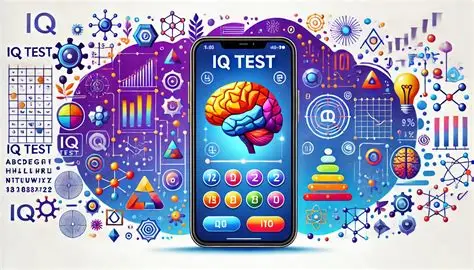
A smartphone-based intelligence test app trims that experience down to 20-40 minutes while keeping the core structure intact: pattern matching, numerical sequences, verbal reasoning, and visual-spatial puzzles.
Here’s what typically changes in the mobile format:
- Adaptive difficulty — questions get harder or easier based on your previous answers
- Instant scoring — no waiting weeks for a report
- Gamified feedback — progress bars, badges, and comparison charts replace dry percentile tables
- Repeatable sessions — you can retest after a few weeks to track changes
None of this makes the app a clinical diagnostic tool. But it does make cognitive self-assessment something you can actually fit into your week.
The Core Puzzle Categories You’ll Encounter#
Most reputable testing apps draw from the same handful of puzzle families that have anchored intelligence research for decades. Understanding them helps you prepare mentally and interpret your results with more context.
Logical Sequences and Pattern Recognition#
You’ll see a series of shapes, numbers, or symbols with one missing. Your job is to spot the rule governing the sequence and predict what comes next. These questions measure fluid reasoning — your ability to solve novel problems without relying on memorized facts.
Spatial Rotation Tasks#
These present a 3D object or shape, then ask you to identify how it would look if rotated. Architects, engineers, and designers tend to score well here simply because they exercise this skill daily.
Verbal Analogies#
“Book is to library as painting is to ___?” This format tests how well you map relationships between concepts, a skill tied closely to vocabulary depth and reading habits.
Numerical Reasoning#
Basic arithmetic isn’t the point here — it’s about spotting mathematical patterns, ratios, and logical progressions under light time pressure.
| Puzzle Type | Skill Measured | Average Time per Question |
|---|---|---|
| Pattern Sequences | Fluid reasoning | 30-45 seconds |
| Spatial Rotation | Visual-spatial processing | 40-60 seconds |
| Verbal Analogies | Language comprehension | 20-30 seconds |
| Numerical Logic | Quantitative reasoning | 35-50 seconds |
How Accurate Are the Scores Really?#
This question comes up constantly, and the honest answer is: it depends on the app and how you use it.
Well-designed apps calibrate their questions against large sample populations, similar to the methodology used in academic research. Poorly designed ones just recycle generic trivia and slap an “IQ” label on the final screen.
A few signs separate credible apps from gimmicks:
- The app explains its scoring methodology somewhere in the settings or about section
- Results are presented as a range or percentile, not a single suspiciously precise number
- Questions avoid cultural bias (no obscure trivia tied to one country or language)
- The test includes a mix of puzzle types rather than one repetitive format
Treat your score as a snapshot, not a verdict. Mood, sleep, stress, and even the time of day can shift your performance by several points.

Teste de QI e Inteligência
Size68.8MB
PlatformiOS
PriceFree
Information about size, installs, and rating may change as the app is updated in the official stores.
Practical Ways to Use an IQ App Beyond Curiosity#
Checking your score once and forgetting about it wastes the app’s real potential. These tools work best as part of a routine.
Tracking Cognitive Trends Over Time#
Retesting every 4-6 weeks, under similar conditions, lets you spot patterns. Did your spatial reasoning improve after a month of playing chess? Did verbal scores dip during a stressful work period? The data tells a story.
Identifying Weak Spots for Targeted Practice#
Most apps break down your performance by category. If numerical reasoning consistently lags behind the rest, that’s a signal to spend time on logic puzzles or math-based brain games instead of generic trivia.
Warming Up Before High-Stakes Assessments#
Job candidates preparing for aptitude tests, or students studying for entrance exams, often use these apps as low-pressure practice. The question formats overlap significantly with standardized cognitive assessments used by employers and universities.
Common Mistakes People Make When Testing Their IQ#
A few habits consistently skew results and leave people confused about their actual scores.
- Testing when exhausted — fatigue drops working memory performance noticeably
- Rushing through instructions — misunderstanding the question format costs more points than actual difficulty
- Comparing scores across different apps — each uses its own scale and question bank, so cross-app comparisons are meaningless
- Taking the test repeatedly in one sitting — practice effects inflate scores without reflecting real improvement
Spacing out your attempts and testing under consistent conditions gives you a far more honest picture.
What Your Score Actually Tells You About Daily Life#
A number on a screen feels abstract until you connect it to real skills. Strong pattern recognition often correlates with faster troubleshooting at work. Solid spatial reasoning shows up when you’re parallel parking or assembling furniture without the instructions.
Verbal reasoning connects directly to how quickly you absorb new information from books, articles, or conversations. None of these are destiny — they’re more like current fitness levels for specific mental muscles.
Research from cognitive psychology consistently shows that fluid reasoning, one of the main things these apps measure, can improve with deliberate practice. Puzzle games, reading diverse material, and learning new skills all contribute measurably over months, not days.
Choosing the Right App for Your Goals#
Not every app serves the same purpose. Some prioritize entertainment with flashy animations and minimal scientific grounding. Others lean academic, with longer tests and detailed breakdowns.
Before downloading, consider what you actually want:
- Quick entertainment — look for short tests with instant, shareable results
- Serious self-assessment — prioritize apps that disclose their methodology and offer category breakdowns
- Exam preparation — choose apps that mirror the format of standardized aptitude tests you’ll actually face
- Long-term tracking — pick one app and stick with it, so your historical data stays comparable
Reading user reviews helps too. Patterns in complaints — like “questions repeat constantly” or “results felt random” — reveal more than marketing copy ever will.
Bringing Science and Convenience Together#
The gap between rigorous cognitive research and everyday curiosity used to be wide. Mobile apps closed it, not by replacing clinical psychology, but by translating its core puzzle formats into something accessible on a lunch break.
Used thoughtfully, with realistic expectations and consistent testing habits, an IQ test app becomes less about bragging rights and more about understanding how your mind actually works — and where it has room to grow. 🚀
Keep reading
You might also like
Loud Alarm Clock Apps That Actually Wake You Up
Struggling to wake up on time? A **loud alarm clock app** might be the simple fix your mornings have been missing. 🔔…

Best Dance Learning Apps for Beginners and Professionals
Learning to dance no longer requires a studio membership or a weekly class schedule — a dance learning app can turn your…