
Anúncios
Discovering where your family truly comes from used to require years of archival digging. Today, an ancestry app can trace your roots in weeks. 🧬
Genealogy research isn’t just a hobby for retirees anymore. Millions of people now use a smartphone to piece together family trees, DNA matches, and historical records in a single afternoon.
Whether you’re curious about a surname mystery or searching for living relatives, the right ancestry tool can turn vague family stories into documented facts.
What an Ancestry App Actually Does#
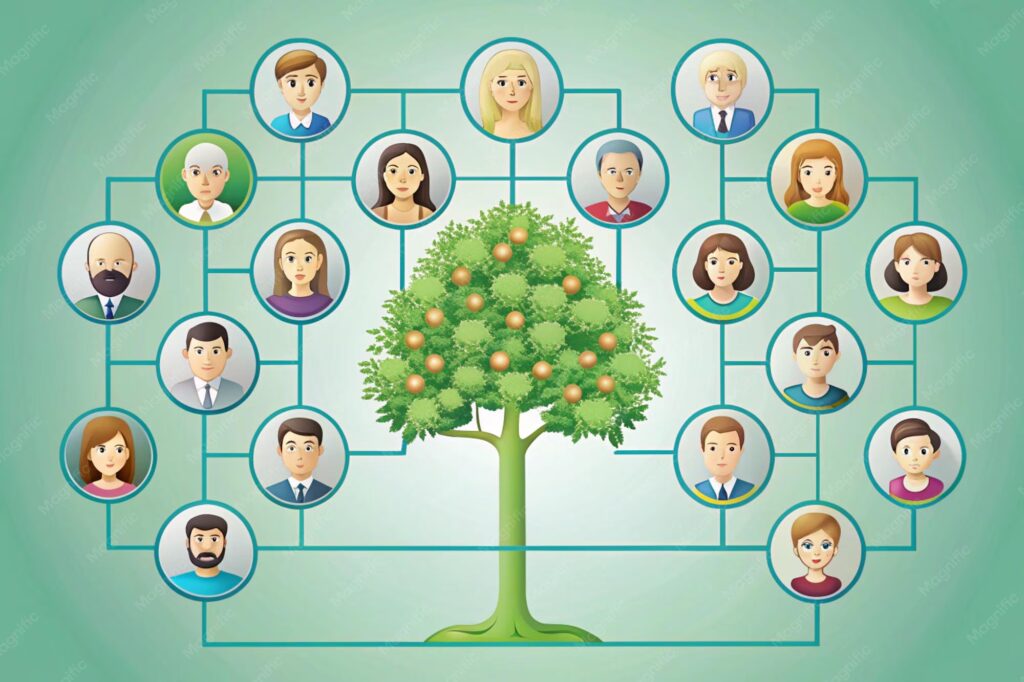
An ancestry app combines three core functions: building a family tree, analyzing DNA samples, and searching massive historical databases. Most platforms let you start with a free tree builder before deciding whether to invest in a DNA kit.


The real value comes from cross-referencing. A birth certificate from 1890 means little alone, but paired with a census record and a DNA match, it confirms a direct bloodline.
- Family tree builder: visual charts that update automatically as you add relatives
- DNA ethnicity estimate: breakdown of regional and ethnic origins
- Record hints: automatic suggestions pulled from billions of indexed documents
- DNA matching: connects you with biological relatives who’ve also tested
Comparing the Leading Ancestry Platforms#
Not every app serves the same purpose. Some prioritize DNA science, others focus on document archives. Picking the wrong one wastes both time and money.
| Platform | Strongest Feature | Database Size | Best For |
|---|---|---|---|
| Ancestry | U.S. census and immigration records | 30+ billion records | North American roots |
| MyHeritage | European record collections | 18+ billion records | Users with European ancestry |
| 23andMe | Health and DNA reports | N/A (DNA-focused) | Genetic wellness insights |
| FamilySearch | Free global records | Billions, no paywall | Budget-conscious researchers |
Why Database Size Isn’t Everything#
A platform boasting billions of records sounds impressive, but coverage varies wildly by country. MyHeritage, for instance, holds stronger Scandinavian and Eastern European archives than most American-centric competitors.
Before committing to a subscription, check whether the app covers the specific region your ancestors came from. A free trial week is usually enough to test this.
How DNA Testing Actually Works Behind the Scenes#
You spit into a tube or swab your cheek, mail it to a lab, and within 6 to 8 weeks you get a report. But what happens during that wait matters.
Labs extract your DNA and compare specific markers against reference populations collected from thousands of people with documented ancestry. Your ethnicity estimate is essentially a statistical best guess, not an exact measurement.
- Autosomal DNA: inherited from both parents, used for ethnicity estimates and close relative matching
- Y-DNA: passed father to son, useful for tracing direct paternal lines
- Mitochondrial DNA: passed from mother to all children, traces maternal lineage
This is why two siblings can get slightly different ethnicity percentages — they inherit different combinations of each parent’s DNA.
Reading Your Results Without Getting Confused#
Most beginners stare at their ethnicity pie chart and feel disappointed when a “surprise” region shows up. Before panicking, remember these reports update periodically as reference panels grow more precise.
A result showing 12% Iberian Peninsula heritage today might shift to 8% next year, not because your DNA changed, but because the comparison database expanded.
Building a Family Tree That Actually Holds Up#
Random hints from an app are a starting point, never proof. Serious researchers follow a verification method before accepting any ancestor into their tree.
- Start with yourself and work backward — never guess forward from an old record
- Require two independent sources (birth record + census, for example) before confirming a name
- Note conflicting information instead of deleting it; discrepancies often reveal name changes or immigration details
- Save document images, not just transcriptions, since typing errors are common in old archives
Skipping verification creates “tree contamination” — a common problem where incorrect ancestors get copied from other users’ public trees and spread across the platform.

MyHeritage
Size601.2MB
PlatformiOS
PriceFree
Information about size, installs, and rating may change as the app is updated in the official stores.
Privacy Questions You Should Ask Before Testing#
Handing over your genetic blueprint deserves scrutiny. Each company has different policies on law enforcement access, data sharing, and third-party research partnerships.
- Can you delete your raw DNA data permanently, not just hide it?
- Does the company sell anonymized data to pharmaceutical or research firms?
- Is law enforcement access limited to violent crime investigations, or broader?
- Can relatives who didn’t test still find you through shared matches?
Reading the privacy policy takes fifteen minutes and prevents regret later. Most reputable platforms now offer opt-out options for research sharing by default.
Protecting Living Relatives in Your Tree#
Public trees automatically hide information about living people, but mistakes happen when users manually mark someone as deceased to bypass restrictions. Always double-check privacy settings before making a tree public.
Common Mistakes That Derail New Researchers#
Beginners often chase every hint without pausing to question accuracy. This creates messy trees full of unrelated people with similar names.
- Assuming same surname means same family: common names like Smith or Silva appear across unrelated bloodlines constantly
- Ignoring date inconsistencies: a person “born” after their supposed parent died signals a records mix-up
- Trusting translated records blindly: immigration officers historically misspelled foreign names on arrival
- Overlooking maiden names: women frequently disappear from records once married, especially in older censuses
Slowing down and cross-checking two or three sources per generation saves months of rework later.
Getting Practical Value Beyond Curiosity#
Genealogy apps aren’t only about satisfying curiosity. Some people use DNA matching to locate biological parents after adoption, confirm Indigenous or tribal heritage for documentation purposes, or identify hereditary health risks flagged in certain reports.
Others use historical records to apply for dual citizenship through ancestral bloodlines — Italy, Ireland, and Poland all offer citizenship by descent programs that require documented proof exactly like what these apps help uncover.
Starting this kind of research with a clear goal, rather than open-ended curiosity, tends to produce faster and more satisfying results. Whether that goal is connecting with living cousins, documenting family medical history, or simply filling gaps in an oral family story, the right app turns scattered fragments into a coherent narrative worth passing down.
Keep reading
You might also like

Loud Alarm Clock Apps That Actually Wake You Up
Struggling to wake up on time? A **loud alarm clock app** might be the simple fix your mornings have been missing. 🔔…

Best Dance Learning Apps for Beginners and Professionals
Learning to dance no longer requires a studio membership or a weekly class schedule — a dance learning app can turn your…